Trees Removed With Equipment Sized Correctly
Tree removal in Winston-Salem for wooded lots where canopy overhangs structures and access limits equipment options
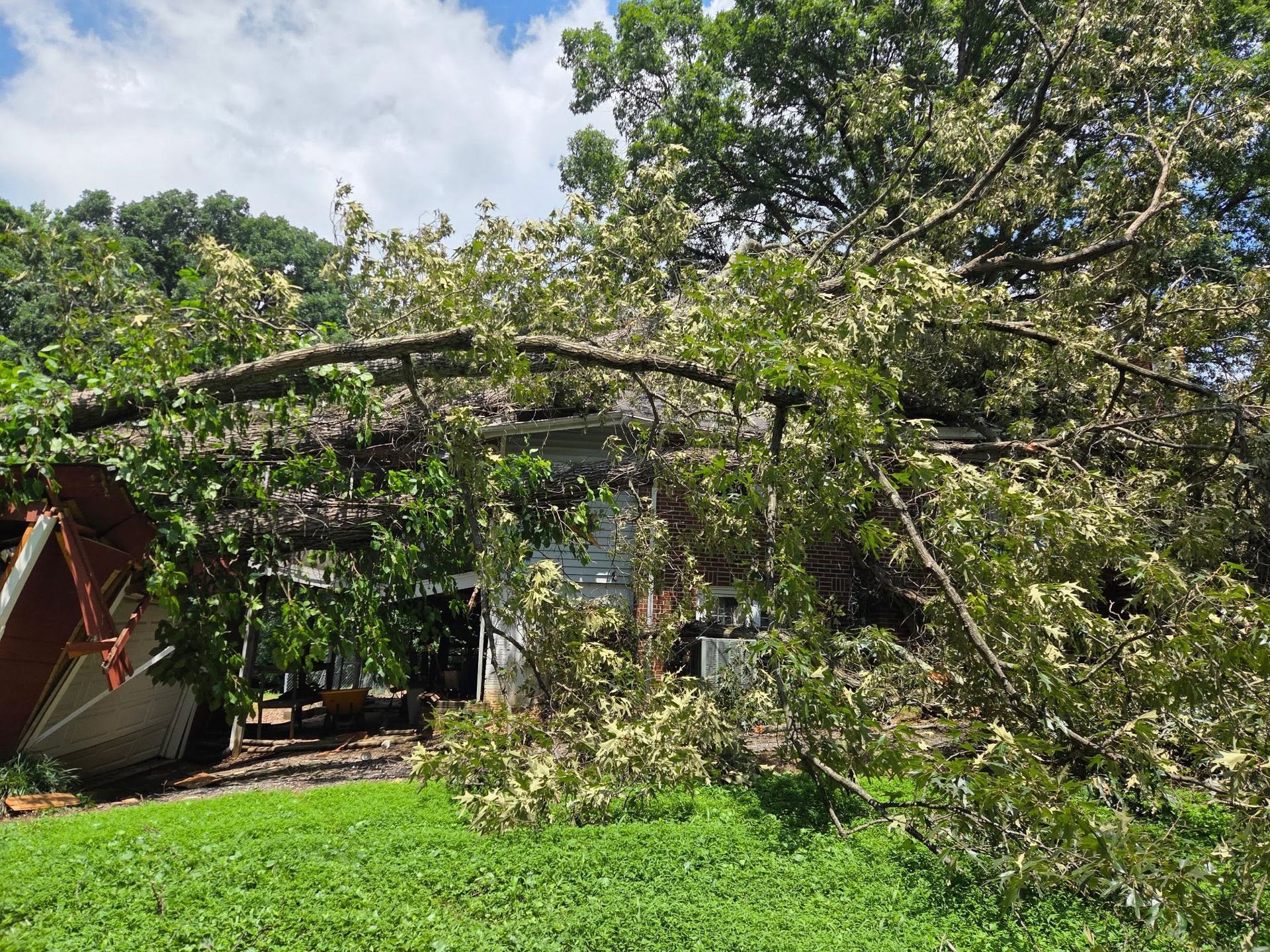
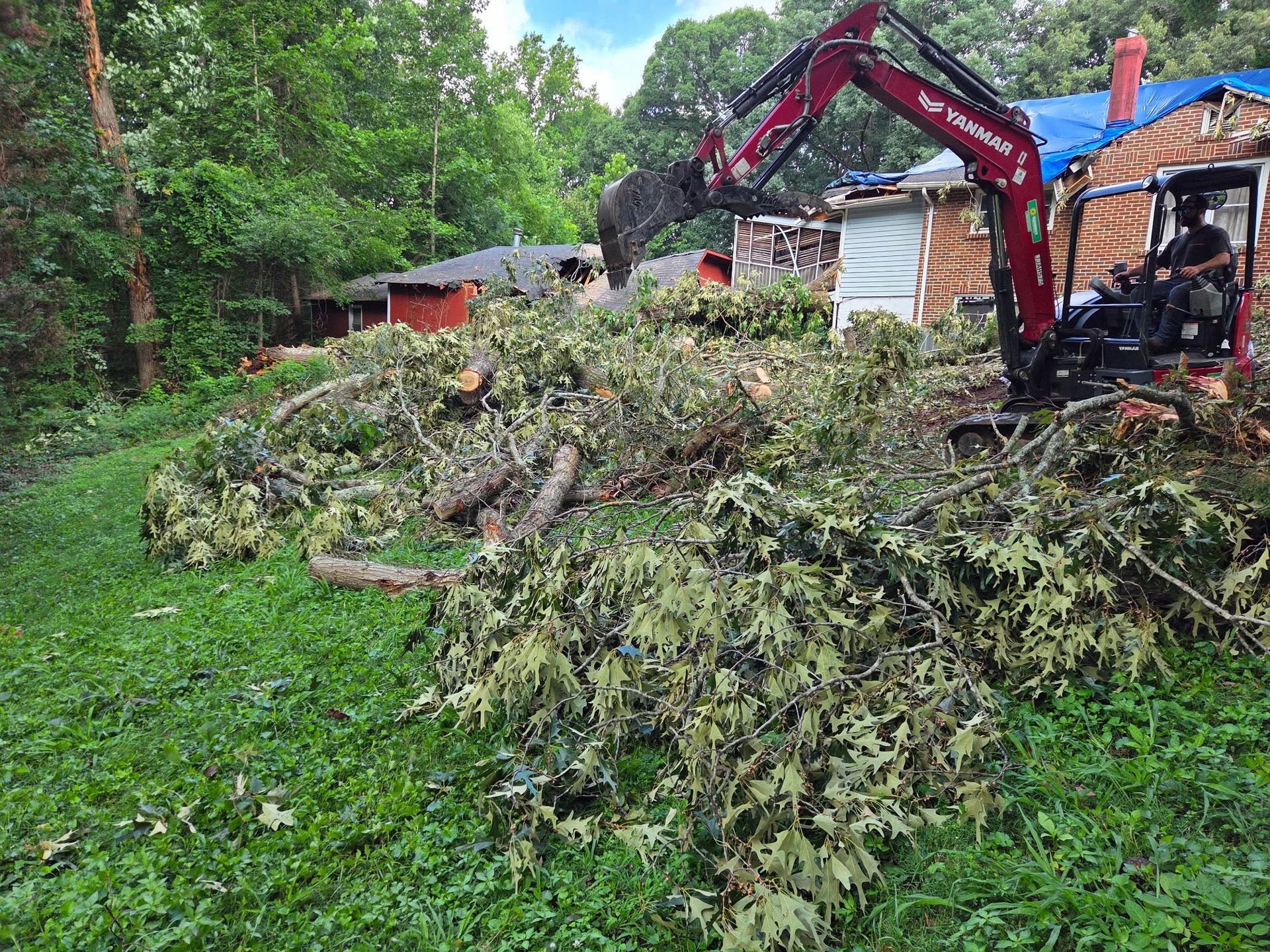
Mature hardwoods across Forsyth and Surry County properties create hazard and clearing challenges for residential builds and rural lot improvements. The crew at B&G Land Management evaluates tree diameter and access conditions before mobilizing equipment, which means the equipment arriving on your site is sized correctly for the trees being removed. Walkertown and King properties with wooded lots often require careful removal where canopy overhangs structures or where root zones sit close to utility lines and septic systems.
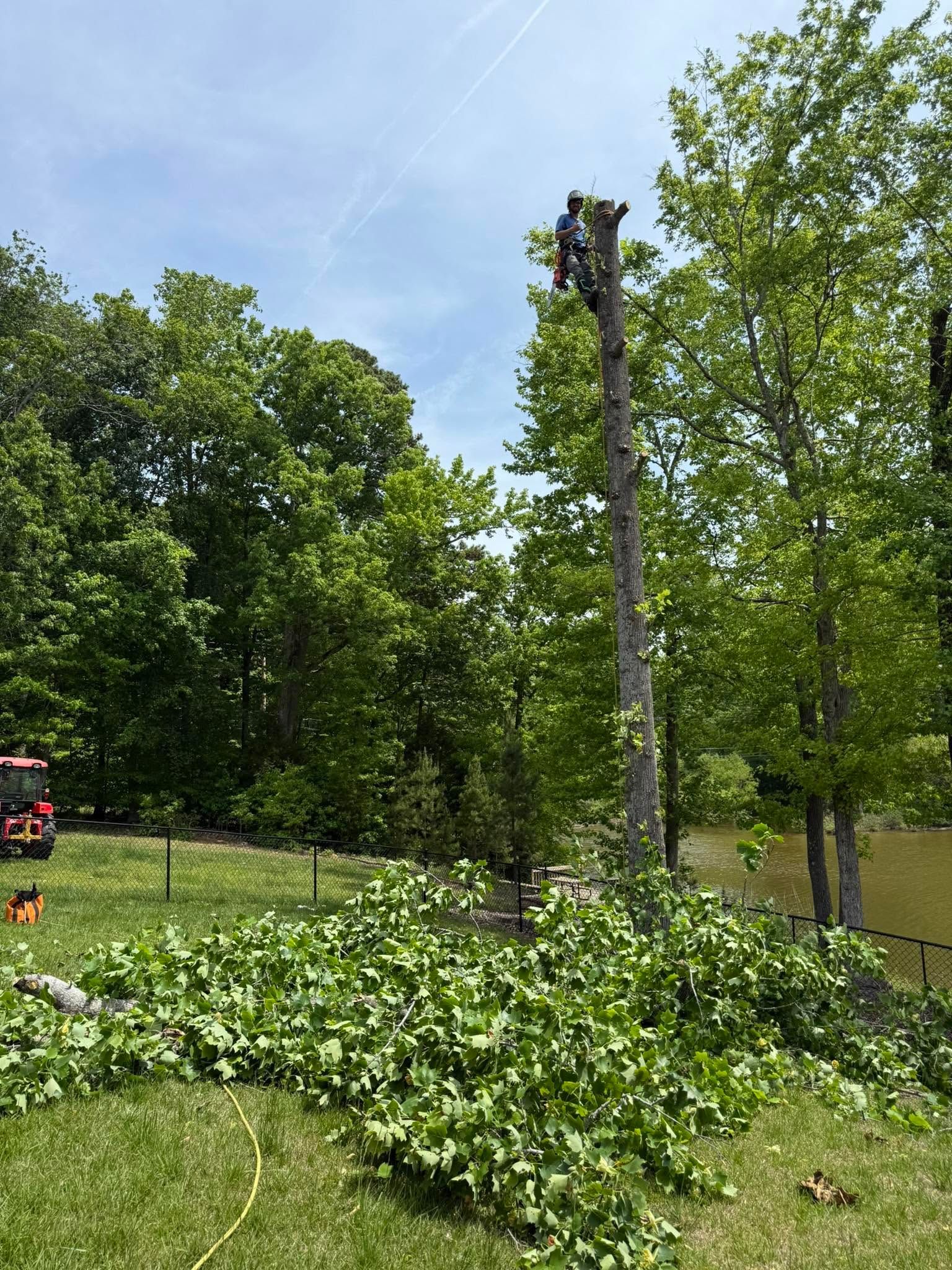
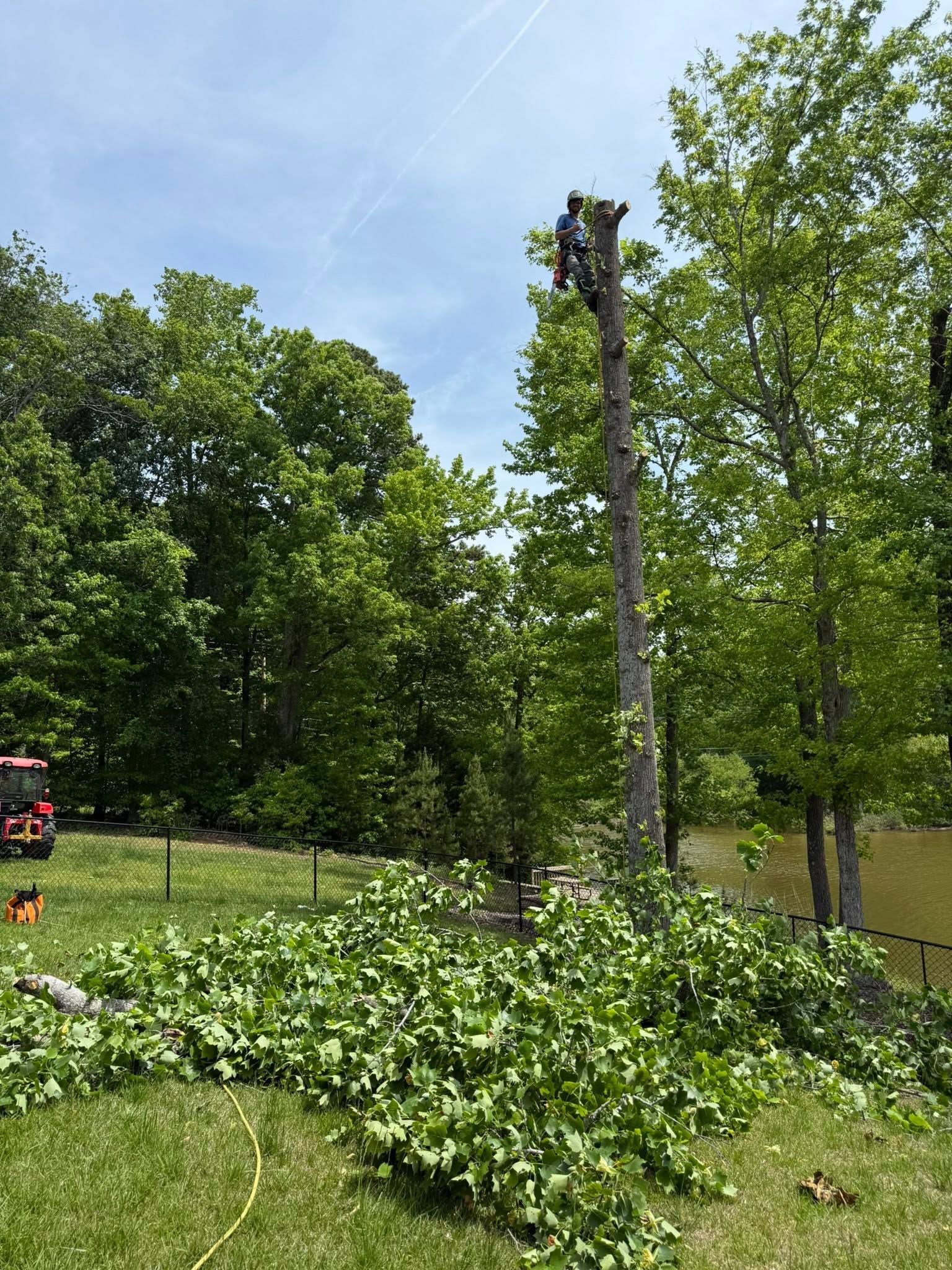
Tree removal involves directional felling when clearance allows, or sectional dismantling when canopy extends over structures or property lines. After the tree is down, a 135-horsepower forestry mulcher processes trunks and limbs in place, which eliminates the need to haul logs and brush off site. Equipment selection depends on whether the tree sits in open ground or tight quarters, and whether surrounding grade can support tracked machines or requires lighter rubber-tired equipment.
Arrange an on-site evaluation to review tree size, access routes, and equipment requirements for your property.
What Proper Tree Removal Requires
Safe tree removal starts with evaluating the tree's lean, canopy weight distribution, and surrounding obstacles before any cuts are made. Removal plans account for where the tree will fall or how sections will be lowered if the tree must come down in pieces. Equipment staging considers ground conditions, overhead clearance, and access routes that avoid damaging existing landscape or underground utilities.
Once trees are removed, you no longer see canopy shadowing structures, roots lifting hardscape surfaces, or limbs positioned to fall during the next storm. The lot opens up for grading work or new construction without debris piles waiting for a separate hauling crew. Ground disturbance from equipment tracks or outriggers gets smoothed during final grading if tree removal is part of a larger site work project.
B&G carries three million dollars in liability coverage and brings twenty years of combined industry experience to tree removal projects across the Triad. The decision to remove a tree depends on whether it interferes with construction, creates a documented hazard, or blocks planned site improvements. Removal is not the default answer for every tree on a wooded lot, but when removal is warranted, the work is done with equipment that matches the tree size and site conditions.
Answers to Frequent Service Questions
Property owners preparing sites for construction or addressing hazard trees across the Triad typically want to know what tree removal involves and how equipment choices affect the process.
What determines whether a tree can be felled in one piece or must be sectioned?
Clearance around the tree determines felling method. If the tree can fall without hitting structures, vehicles, fences, or utility lines, directional felling is faster and less expensive. Trees with canopy overhanging structures or property lines require sectional dismantling, where limbs and trunk sections are lowered in controlled cuts.
How does forestry mulching after tree removal eliminate hauling costs?
A 135-horsepower mulcher processes trunks and limbs into mulch on site, which removes the need to load logs onto trucks and pay dump fees. Mulch can be spread across cleared areas to control erosion or hauled off depending on your site plan. Processing in place reduces the number of truck trips and keeps project cost lower than traditional log removal.
When is the best time to remove trees during a new construction project in Winston-Salem?
Tree removal should happen after site layout is staked but before grading equipment begins moving dirt. This sequence ensures you are not removing trees that could stay and allows removed material to be processed before final grade work. Winter months offer better ground conditions for heavy equipment on Triad properties with clay soil.
What liability coverage should a tree removal crew carry on residential properties?
Three million dollars in liability coverage is standard for commercial tree work involving heavy equipment near structures. Coverage protects you if equipment damages existing improvements or if falling sections cause unintended impact. Verify coverage before any crew begins work on your property.
How does tree diameter affect equipment requirements for removal?
Trees exceeding twenty-four inches in diameter require professional-grade equipment and rigging if sectional removal is necessary. Smaller trees can be handled with standard forestry equipment. The crew sizes equipment to the tree rather than forcing undersized gear to handle work beyond its capacity, which reduces risk and keeps the job moving efficiently.
B&G Land Management provides free estimates for tree removal across residential and rural properties in the Triad. Call to schedule a site visit where the crew can evaluate tree size, access conditions, and equipment needs specific to your lot.